
Home
About Amber

Portfolio

Home Search
Home Valuation
Neighborhoods

Testimonials

Buyer's Guide
Seller's Guide
Mortgage Calculator
Contact Us

My Search Portal
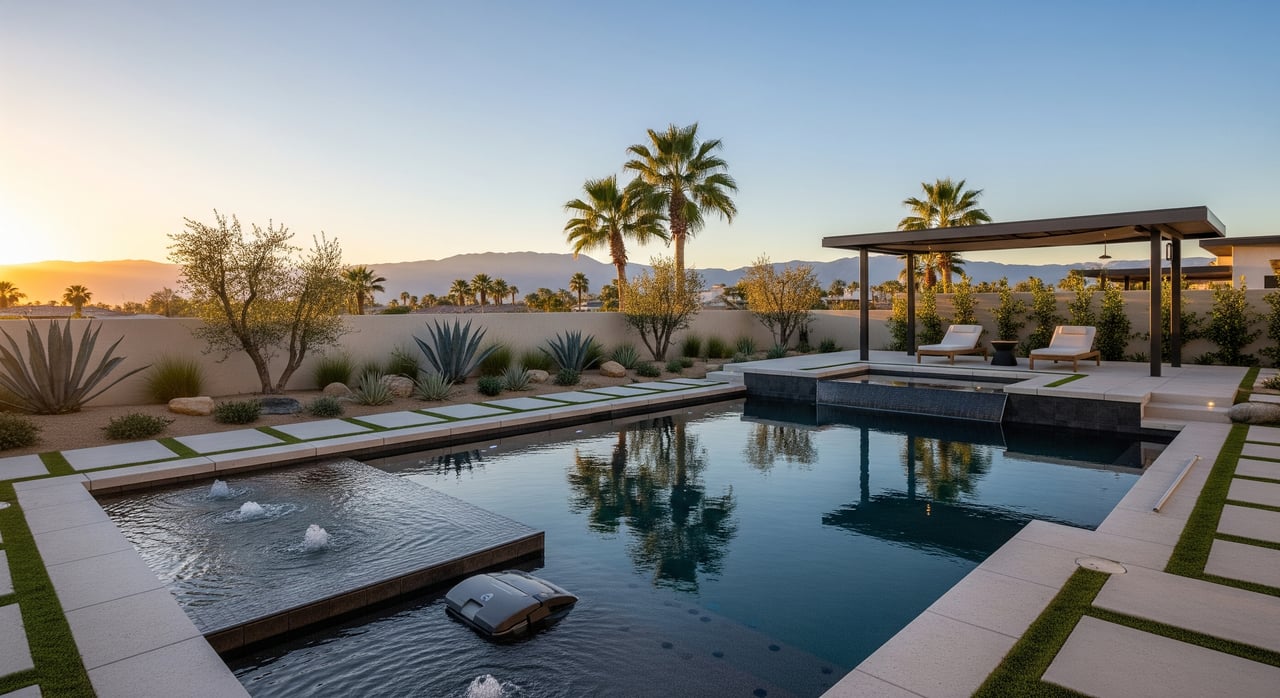
Thinking about buying or selling a home with a pool in Indio? The heat, sun, and wind that make desert living great also make pool care different here. You want a clean, safe pool that does not waste water or energy, and you want clear expectations on upkeep and costs. This guide gives you proven, local strategies to protect your time and budget and keep your pool a plus for resale. Let’s dive in.
Indio sits in the Coachella Valley’s hot, very dry desert. Summers often run above 100°F, rain is scarce, and there are more than 300 sunny days each year, which drives fast water loss and sanitizer burn-off (local climate snapshot). Wind and dust are common, adding debris and fine particulates that stress filters and plumbing (dust events in the valley). Local agencies encourage wise water use, so frequent drain-and-refill cycles are discouraged unless needed for health or repairs (Indio Water Authority guidance).
Hot, dry, and windy conditions pull water from the surface quickly. You top off more often and lose chemicals with that water. Over time, minerals concentrate as pure water evaporates, which can raise hardness and total dissolved solids.
Strong UV and warm water increase chlorine demand. Maintaining effective free chlorine during peak sun takes steady circulation and thoughtful use of stabilizer. The CDC recommends keeping pH around 7.2 to 7.8 and free chlorine at least 1 ppm for safety baselines (CDC pool operations).
Windblown sand and dust can clog skimmer baskets, strain filters, and cloud the water. Expect more frequent skimming and filter maintenance after windy or dusty periods. Consistent housekeeping keeps algae at bay.
Evaporation leaves minerals behind, which raises hardness and can cause scale or staining. Partial dilution and good chemistry control manage this. Full drains for cosmetics are discouraged in Indio.
Longer run-times in summer and older single-speed pumps can push up electricity bills. Variable-speed pumps help by circulating longer at lower RPMs, improving clarity with less energy.
Use a pool cover whenever the pool is not in use. Covers commonly reduce evaporation by about 30 to 50 percent, saving makeup water and chemicals and helping retain heat (cover performance overview). If budget allows, consider an automatic cover for convenience and safety.
Aim for at least one full turnover of water daily, and in hot months many owners target 1.5 to 2 turnovers, which is often 8 to 14 hours depending on size and flow (turnover guidance). Running the pump during the day helps distribute sanitizer when UV is highest. Split cycles into morning, afternoon, and evening, and balance with your electric rate plan.
Test more often in summer. Maintain pH near 7.2 to 7.8 and keep free chlorine at or above 1 ppm as a baseline, adjusting for bather load and sun exposure (CDC pool operations). Use cyanuric acid to shield chlorine from UV, but avoid very high levels that slow disinfection and make cleanup harder. If CYA creeps up, partial dilution can help.
A variable-speed pump can cut energy use while improving clarity during long, low-speed cycles. Southern California Edison has offered rebates on qualifying pool pumps in recent years, so check current programs before you upgrade (SCE rebate news). If you heat your pool, Indio’s sunshine makes solar collectors attractive, and covers help keep the heat you add.
California’s Swimming Pool Safety Act requires at least two of several listed drowning-prevention features for new or remodeled residential pools, and inspectors note compliance during permits and property transfers. Confirm which features you have, such as isolation fencing, alarms, or an approved safety cover (California pool safety law). Home inspectors are required to identify missing safety features as part of their protocol (inspector responsibility).
Indio code enforcement expects pools to be secured and maintained, and stagnant or green water can trigger violations. If you plan repairs or a remodel, check local permit procedures in advance (Indio code enforcement). On water use, both the Indio Water Authority and Coachella Valley Water District encourage conservation, discourage unnecessary draining, and enforce outdoor water-use rules, so verify current guidance before large-volume work (Indio Water Authority, CVWD drought updates).
Managed well, a desert pool is a lifestyle win and a selling point. Focus on evaporation control, steady circulation, and simple routines that fit Indio’s sun and wind. Keep safety and local water rules in view, and document your care for buyers. If you want help evaluating a pool home or preparing yours for market, reach out to Amber Haaland for local guidance.
Browse active listings in the area or contact us for off-market listings.
Have an expert help you find out what your home is really worth.