
Home
About Amber
Portfolio

Home Search
Home Valuation
Neighborhoods
Testimonials
Buyer's Guide
Seller's Guide
Mortgage Calculator
Contact Us
My Search Portal
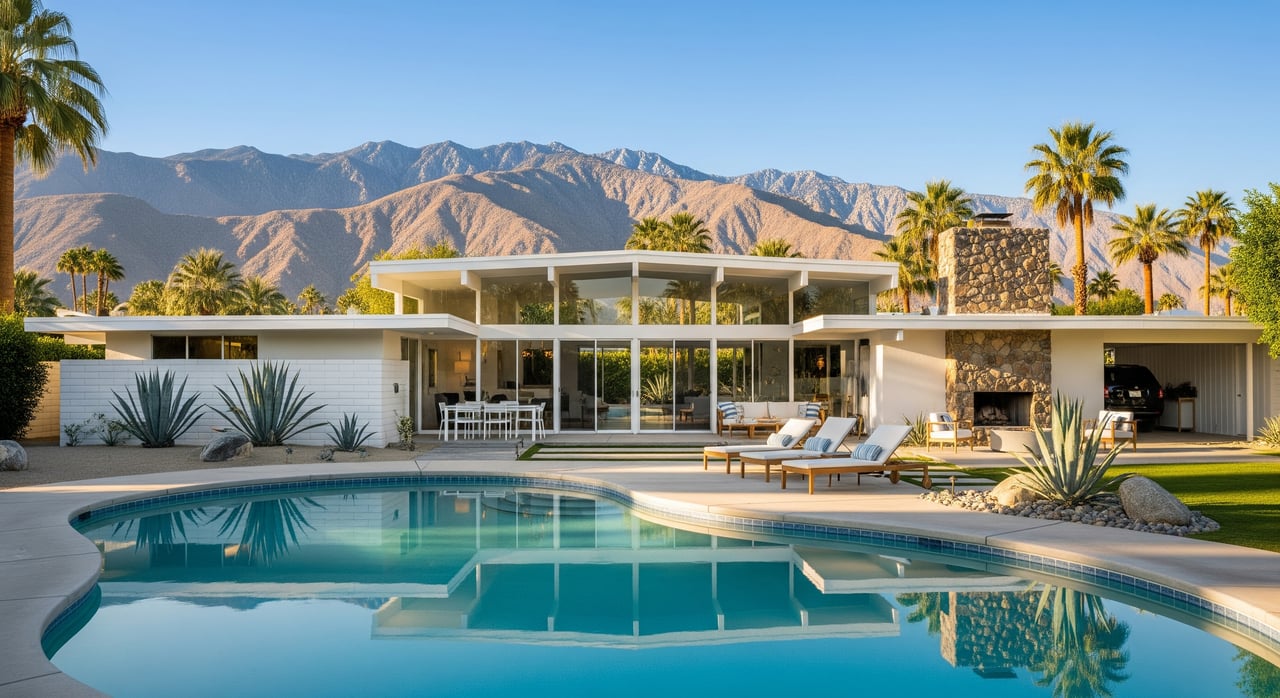
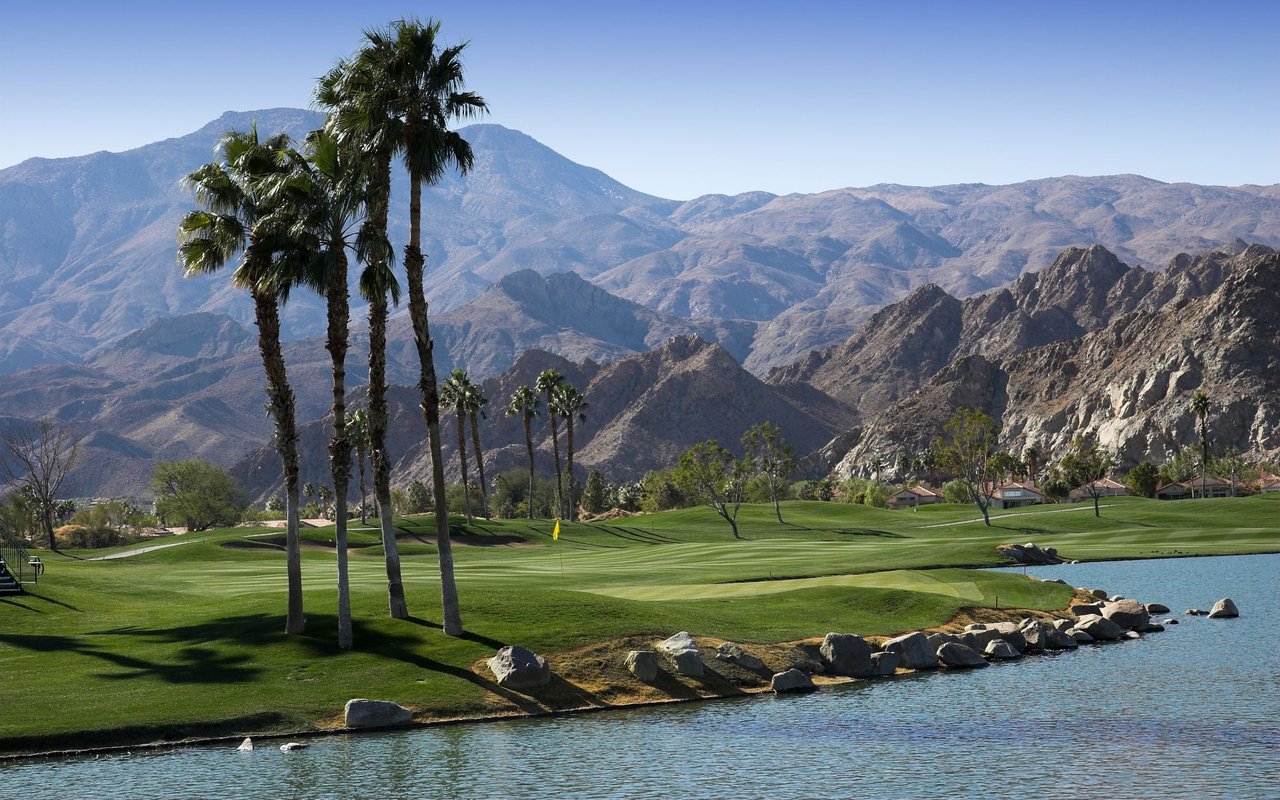
You came to Palm Springs for the light, the mountains, and that clean, low-slung look that never goes out of style. Shopping for a mid-century modern home here is exciting, but it pays to know how these homes were built and what to check before you buy. In this guide, you’ll learn what defines Palm Springs mid-century modern, where to find it, what to inspect, and how to plan financing and restoration so you feel confident from first tour to closing. Let’s dive in.
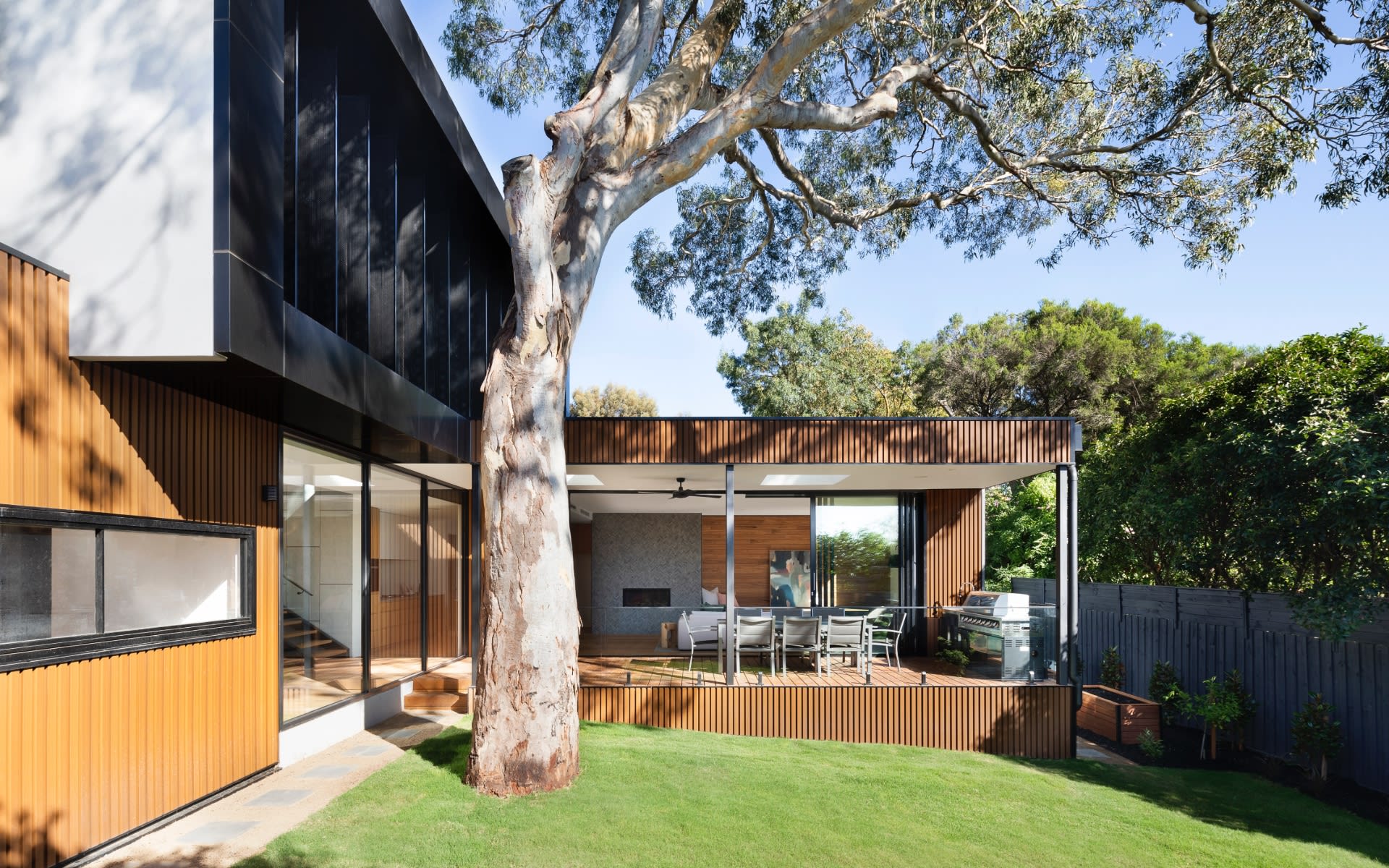
In Palm Springs, mid-century modern typically refers to homes built from the late 1940s through the 1960s and early 1970s. Local builders adapted modernism to the desert, shaping homes for sunshine, views, and easy indoor-outdoor living. You’ll spot low or flat roofs, post-and-beam construction, open layouts, clerestory windows, and large panes of glass that frame the mountains.
Signature details include narrow steel window frames, floor-to-ceiling sliders, concrete or terrazzo floors, and carports. The clean lines are intentional, and the footprints are often modest. Architects associated with the area include Richard Neutra, Albert Frey, E. Stewart Williams, John Lautner, William Krisel, and Donald Wexler. Events like Modernism Week and active local preservation keep demand strong for authentic examples.
You’ll find a wide range of mid-century homes throughout the city. Some neighborhoods have a higher concentration and distinct character:
Proximity to downtown, lot size, and privacy vary by neighborhood. Historic status and documented architectural provenance can influence pricing and the level of review required for exterior changes.
You will likely encounter three broad categories:
Each type involves tradeoffs in cost, maintenance, and potential for changes. If you value original details, factor in the effort to preserve or restore windows, floors, and built-ins.
Mid-century homes reward careful inspections. A thorough lineup helps you understand costs and avoid surprises.
If you plan to change exterior elements, ask whether the property is a designated historic site or within a historic district. Some homes carry preservation easements or require design review for alterations. Always verify prior permits, especially for additions, window changes, and pool work.
Most buyers use conventional loans, although appraisals for one-of-a-kind architect homes can be challenging due to limited comparable sales. Renovation financing, including FHA 203(k) and Fannie Mae Homestyle, can help fund updates while preserving character. Lenders may require you to address safety issues, such as major electrical or structural items, before closing.
Insurance is another key step. Older construction, flat roofs, pools, and original materials can affect premiums or exclusions. Obtain quotes early and confirm coverage for risks that may be relevant for the area. For property taxes, California’s system generally bases tax on assessed value at transfer, with a base rate near 1 percent plus local assessments. For exact figures and parcel-specific assessments, consult county tax resources.
Your goal is to keep what you love while making the home comfortable year-round. Many buyers prioritize items like roofing, HVAC, electrical panels, and pool equipment. Window decisions can be complex. Original steel windows are character-defining, yet they may be less efficient than modern options. Some owners choose restoration or historically sensitive retrofit solutions to balance performance and authenticity.
If you plan to replace roofing, pay attention to drainage and flashing on low-slope roofs. Upgrading electrical service and adding dedicated circuits for modern appliances can improve safety and function. When restoring terrazzo or original concrete floors, look for specialists who understand mid-century materials.
Experience matters with mid-century projects. Seek contractors and architects who have worked on similar homes and can share references. Local preservation organizations, design centers, and event directories are good places to find professionals familiar with Palm Springs modernism. An experienced local agent can coordinate inspectors, lenders, and designers so you move forward with clarity.
Palm Springs has an established short-term rental market along with specific local regulations, permitting, and limits. If rental income is part of your plan, verify permit eligibility, compliance history for the property, and current city rules before you rely on projected income. Build realistic assumptions into your budget and offer.
Demand stays strong for authentic Palm Springs modernism. The supply of intact, unaltered architect homes is limited, which supports premiums for well-preserved properties and prime locations. Cash buyers are common, especially during peak seasons, which can influence offer strategy.
Rather than focusing on a single citywide median, evaluate recent comparable sales in the same neighborhood and condition. Consider lot size, proximity to downtown, views, pool and landscape quality, and architectural provenance. If a home needs restoration, fold realistic upgrade costs into your offer.
Before you start looking:
During the search and offer:
After you are under contract:
Palm Springs is a recognized center of American modernism. Annual Modernism Week events, the Palm Springs Preservation Foundation, and the Palm Springs Art Museum Architecture and Design Center promote education, tours, and preservation. The City of Palm Springs Planning and Historic Preservation programs outline local rules for designated sites and design review. For flood risk checks, use official flood mapping resources. For property taxes and parcel details, consult county assessor and tax offices. When in doubt, ask your agent to help you confirm the latest requirements.
Buying a mid-century modern home is part architecture, part lifestyle, and part project planning. With the right team, you can protect the features you love while upgrading what you need for desert living. If you are weighing neighborhoods, restoration budgets, or short-term rental rules, you do not have to figure it out alone. Start with a clear plan and a partner who knows the market.
Have questions or want a curated list of homes that fit your style and budget? Connect with Amber Haaland to schedule a consultation and take the next step with a trusted local advisor.
Browse active listings in the area or contact us for off-market listings.
Have an expert help you find out what your home is really worth.