Home
About Amber
Portfolio

Home Search
Home Valuation
Neighborhoods
Testimonials
Buyer's Guide
Seller's Guide
Mortgage Calculator
Contact Us
My Search Portal
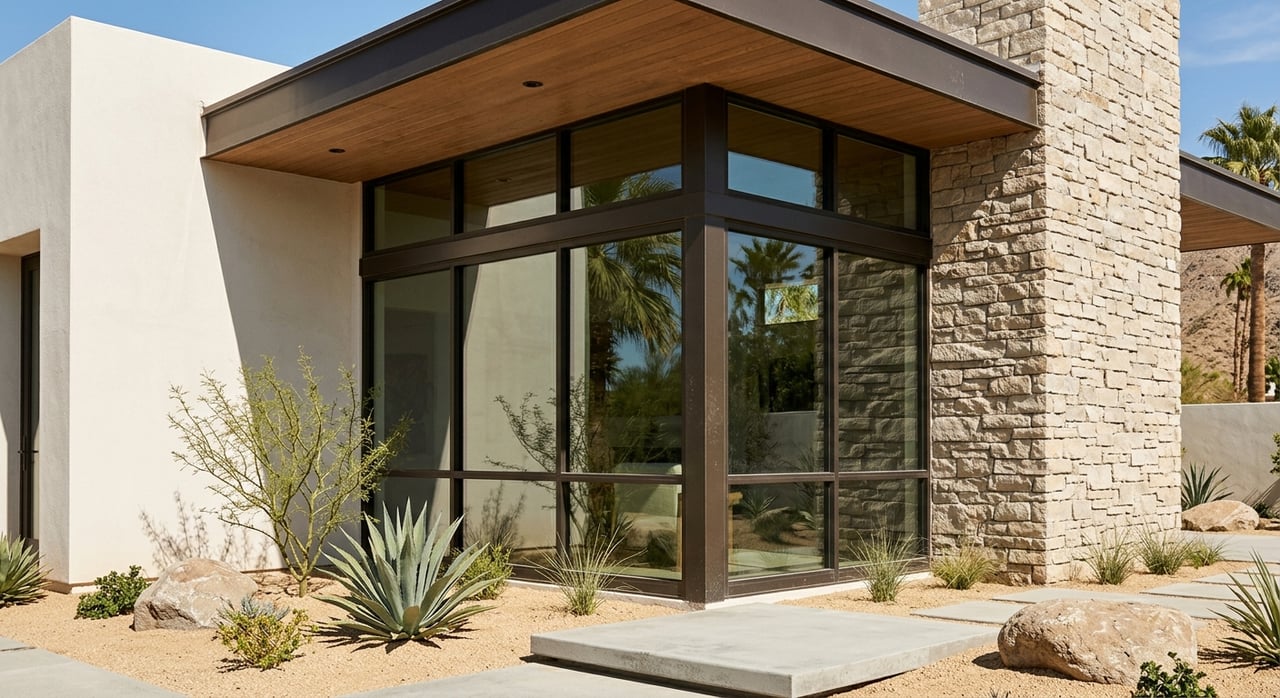
Choosing between Rancho Mirage and Palm Desert for a luxury home is not just about price. It is about how you want to live, how often you will use the home, and what kind of day-to-day setting feels right to you. If you are deciding where to focus your search in the Coachella Valley, this guide will help you compare inventory, lifestyle, and property types so you can move forward with more clarity. Let’s dive in.
If you want a quick summary, Rancho Mirage tends to feel more private, club-oriented, and concentrated at the high end. Palm Desert tends to offer a broader mix of luxury homes, more inventory, and a stronger town-center feel with shopping, arts, and civic amenities.
That does not make one city better than the other. It usually comes down to whether you want a quieter resort setting or a more varied, active year-round environment.
At the city level, Rancho Mirage currently carries a median listing price of about $977,000, with 554 active listings and a median of 77 days on market. Palm Desert sits at about $585,000, with roughly 1,200 active listings and a median of 66 days on market.
Both markets read as balanced, with sale-to-list ratios around 97%. In practical terms, that means your decision is less about one city being dramatically more competitive and more about price range, inventory depth, and the style of luxury home you want.
For luxury buyers, citywide median prices only tell part of the story. In both cities, lower-priced condos, country club homes, and estate-level properties all influence the averages, so neighborhood-level comparisons are often more useful.
Rancho Mirage stands out as the tighter, higher-priced luxury market. Its upper-tier neighborhoods show a more concentrated premium profile, with places like Thunderbird at a median listing price around $2.999 million and Springs Country Club around $1.195 million.
Other Rancho Mirage communities such as Mission Hills, Sunrise Country Club, Rancho Las Palmas Country Club, and Desert Island add more range within the city. Even so, the overall pattern still points to a market with a strong club-and-estate identity.
If you are looking for a luxury address with a legacy reputation and a more enclosed residential feel, Rancho Mirage often fits that goal well. It can appeal to buyers who want a polished, resort-like experience with a stronger sense of privacy.
Palm Desert offers a wider ladder of housing options. Neighborhood pricing ranges from Palm Desert Resort at about $369,000 and Desert Falls at about $487,500 to Ironwood Country Club at about $749,000 and Indian Ridge Country Club at about $1.275 million.
That range is one reason Palm Desert attracts many kinds of luxury buyers. You can find condos, golf-oriented properties, single-family homes, and estate-style options without needing to leave the city.
For buyers who want more selection and flexibility, Palm Desert often feels easier to shop. You may have more chances to compare neighborhoods, amenities, and home styles within your target budget.
Rancho Mirage is described in city planning documents as a low-density, high-quality resort town with a strong sense of place. Mountain views, landscaped arterials, gateways, and private communities all shape the feel of the city.
Many residents live in gated communities, and the city has long been tied to recreation, leisure, and relaxation. That helps explain why Rancho Mirage often feels quieter and more self-contained than nearby markets.
Its planning documents also note that part-time residents in gated communities often center their recreation around golf and tennis. For many buyers, that points to a lifestyle built around clubs, homeowner associations, and easy lock-and-leave ownership.
Palm Desert presents a different kind of appeal. The city describes itself as the cultural and retail center of the desert communities, with a wide array of shopping, recreation, arts, cultural activities, housing, and events.
It also has larger year-round scale, with more than 50,000 full-time residents and more than 30,000 seasonal residents noted in city materials. That larger footprint gives Palm Desert a more active, everyday rhythm.
You also see the difference in the amenity mix. Palm Desert highlights public art on El Paseo, the El Paseo Sculpture Exhibition, and Desert Willow Golf Resort, a city-owned course. That creates a lifestyle that is not limited to private enclaves alone.
Rancho Mirage has a strong architectural and historical identity. City historic resources describe representative housing as Modern and Desert Modern single-family homes, along with condominiums, hotels, and clusters of homes organized around shared pools and recreation amenities.
That mix can be especially attractive if you value design character and lower-maintenance ownership. Many homes are part of communities that support a streamlined seasonal lifestyle.
In simple terms, Rancho Mirage often works well if you want one of these:
Palm Desert offers a broader residential mix. City planning materials describe apartments, condominiums, single-family subdivisions, and multi-million-dollar estates, along with future growth that includes mixed-use centers, resort villas, higher-density housing, and walkable residential areas.
That creates a more layered housing landscape. You may find it easier to compare different ownership styles, from a condo near activity centers to a country club home or a larger estate property.
Palm Desert often fits buyers who want:
If you plan to live in the home full time, Palm Desert often has a practical edge. Its larger permanent population, broader retail base, and planning framework around housing and commercial growth can support a more everyday lifestyle.
That does not mean Rancho Mirage is only for seasonal owners. It can absolutely work for full-time living. Still, its overall feel tends to be more private and resort-specific, which some buyers love and others may find less connected to daily services and activity.
For many seasonal buyers, Rancho Mirage feels especially well aligned. The city’s profile includes high owner occupancy, many one- and two-person households, and a strong pattern of private communities with club-based recreation.
If your goal is a second home that feels calm, polished, and easy to leave for part of the year, Rancho Mirage may be the more natural fit. Palm Desert can also serve seasonal buyers well, but it generally comes with a busier, more varied setting.
| Factor | Rancho Mirage | Palm Desert |
|---|---|---|
| Overall feel | Private, resort-oriented, lower density | Broader, more active, town-center oriented |
| Inventory | Smaller selection | Larger selection |
| Luxury profile | More concentrated at the high end | More segmented across price points |
| Common appeal | Club lifestyle, privacy, lock-and-leave ownership | Variety, convenience, year-round living |
| Property mix | Desert Modern homes, club communities, condos | Condos, single-family homes, golf properties, estates |
If you are torn between the two, focus on your ownership style first. Think about how often you will be here, whether you want a club-centered environment, and how much you value nearby shopping, arts, and civic activity.
It also helps to compare neighborhoods, not just cities. In both Rancho Mirage and Palm Desert, the feel can change a lot from one community to the next, especially in country club and luxury enclaves.
A smart search usually starts with three questions:
Once you answer those questions, the right path often becomes much clearer.
Whether you are narrowing down a second home, a golf property, or a full-time luxury move in the Coachella Valley, local guidance can save you time and help you compare the details that matter most. If you want tailored insight on Rancho Mirage, Palm Desert, or both, connect with Amber Haaland for a personalized consultation.
Browse active listings in the area or contact us for off-market listings.
Have an expert help you find out what your home is really worth.